Reports and Publications

Report Design for UNICEF

Pathways To Better Protection
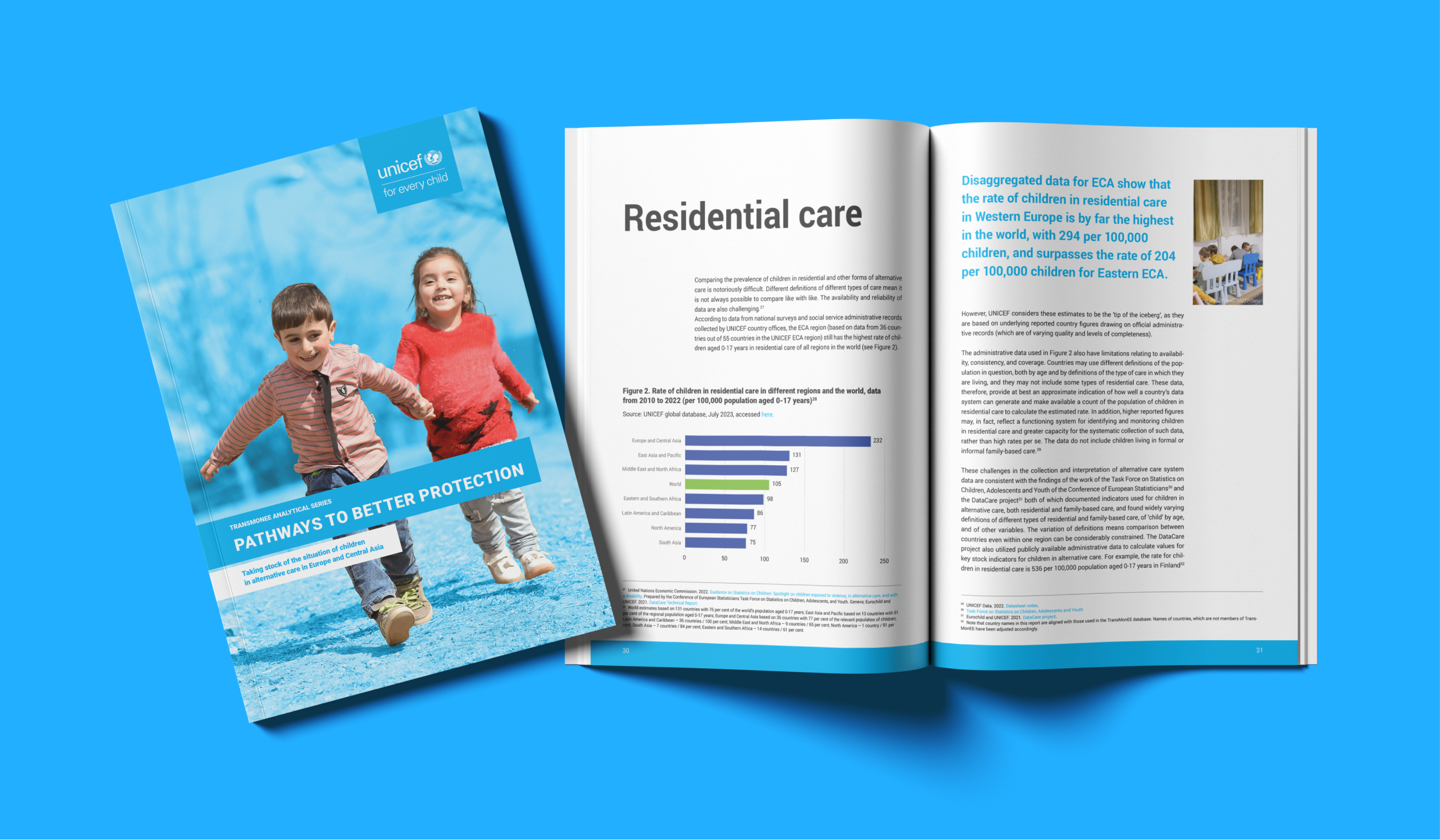
UNICEF report titled 'Pathways to Better Protection' with a cover image of two children running and smiling, one in a striped shirt and the other in a red sweater. The open pages show a section titled 'Residential care' presenting a bar chart comparing rates of children in residential care across regions from 2010 to 2022, with Europe and Central Asia highest. Text next to the chart highlights data showing Western Europe has the highest rate globally and includes a photo of children in a classroom setting.

Challenge

Develop a design within the framework of the UNICEF brand book, while also ensuring that the report is interesting and readable.

Services

  • Report design concepts
  • Layout mockups
  • Print-ready files and instructions for the printing house
  • Custom icons and data visualizations (optional)
  • Social media promotional graphics (optional)
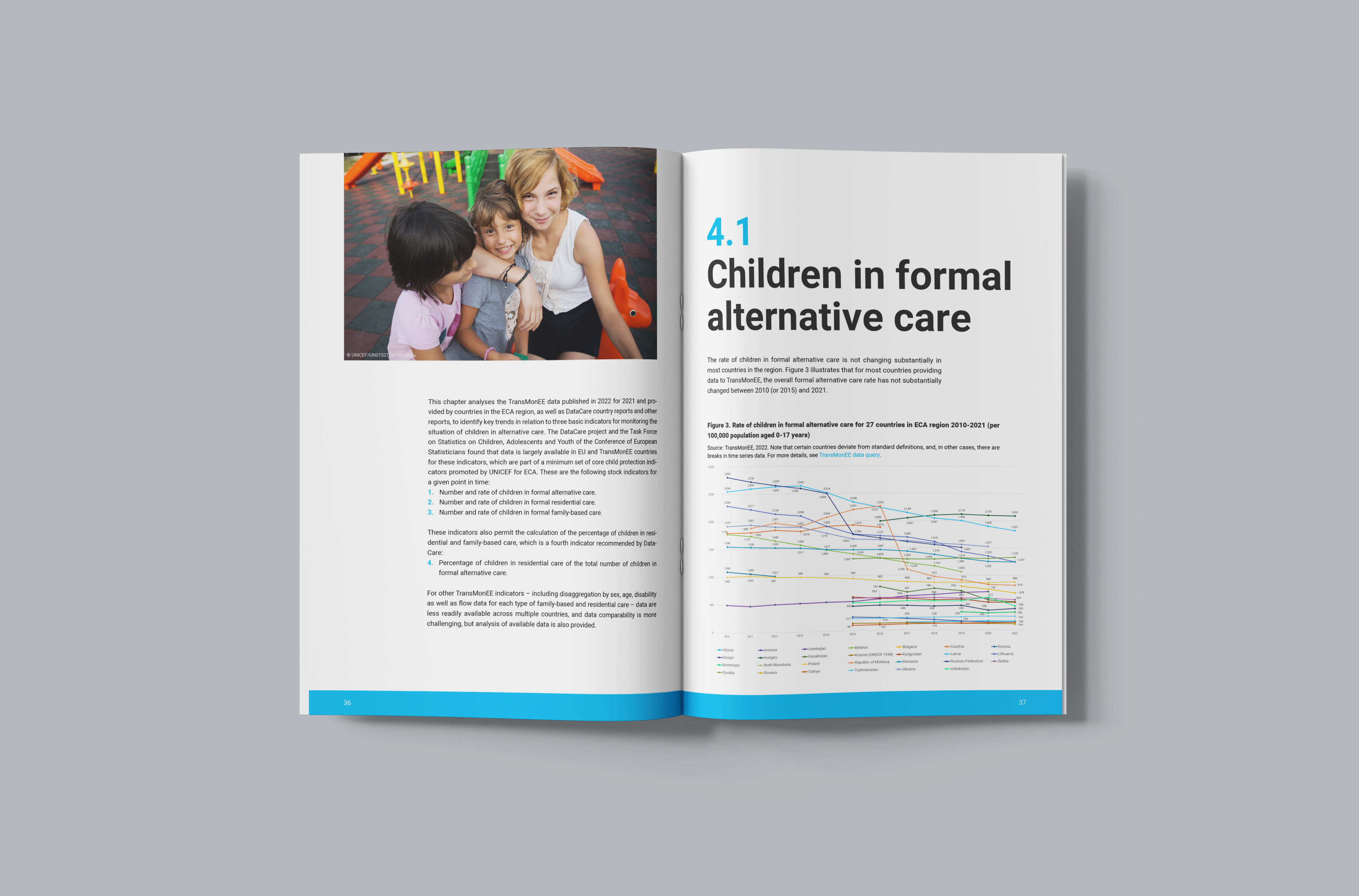
Open book showing a report chapter titled 'Children in formal alternative care' with text, a line graph, and a photo of three smiling children on a playground.Open book showing a page with large bold text on the left about children in formal residential and family-based care, and a chart on the right comparing rates of children in residential care in 28 countries in 2021.
Smiling young girl with blonde curly hair holding a blue balloon indoors, wearing a grey shirt and pink pants with white stars, with other children and adults partially visible in the background.
© UNICEF/UNI430118/Filippov
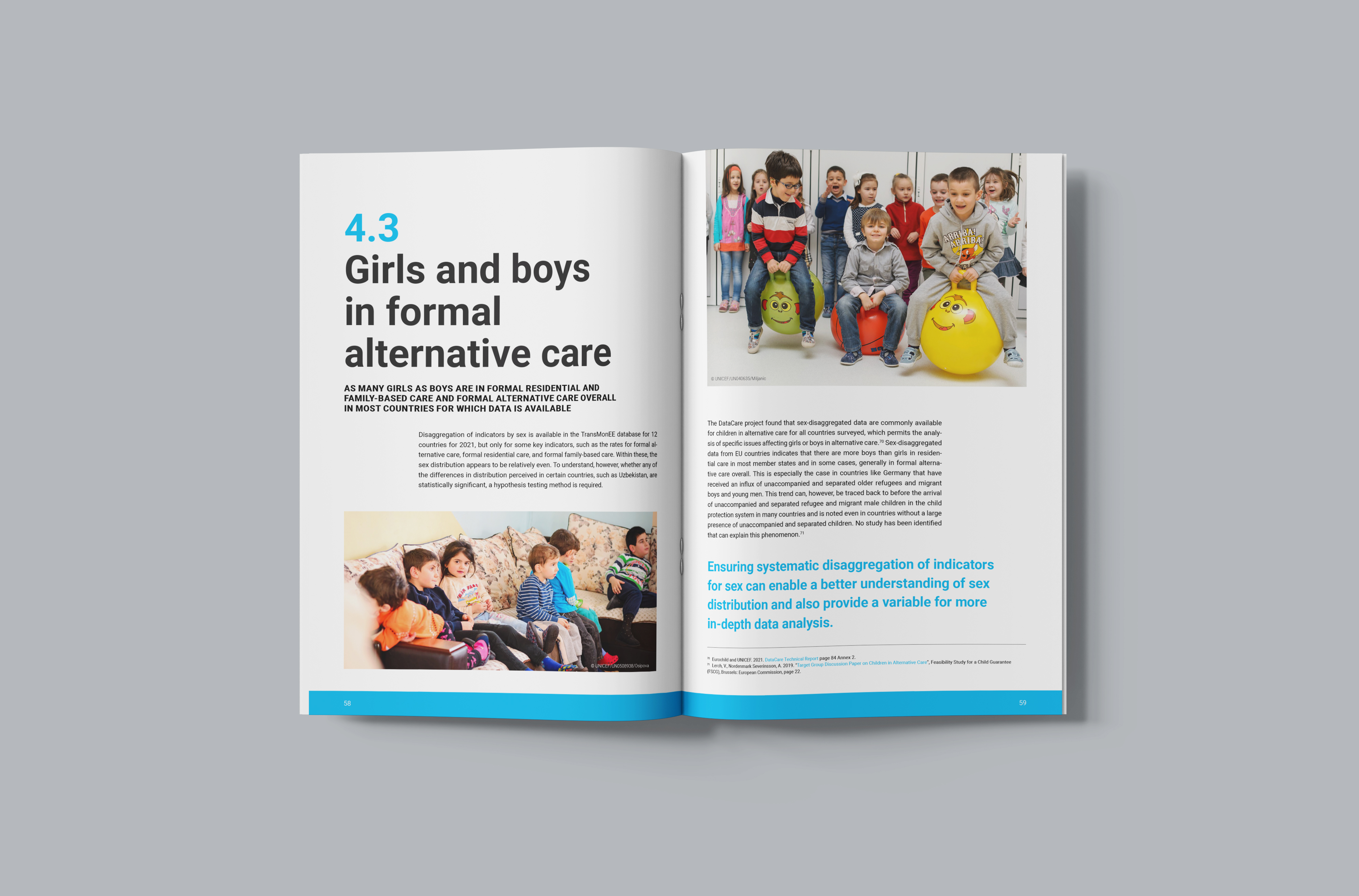
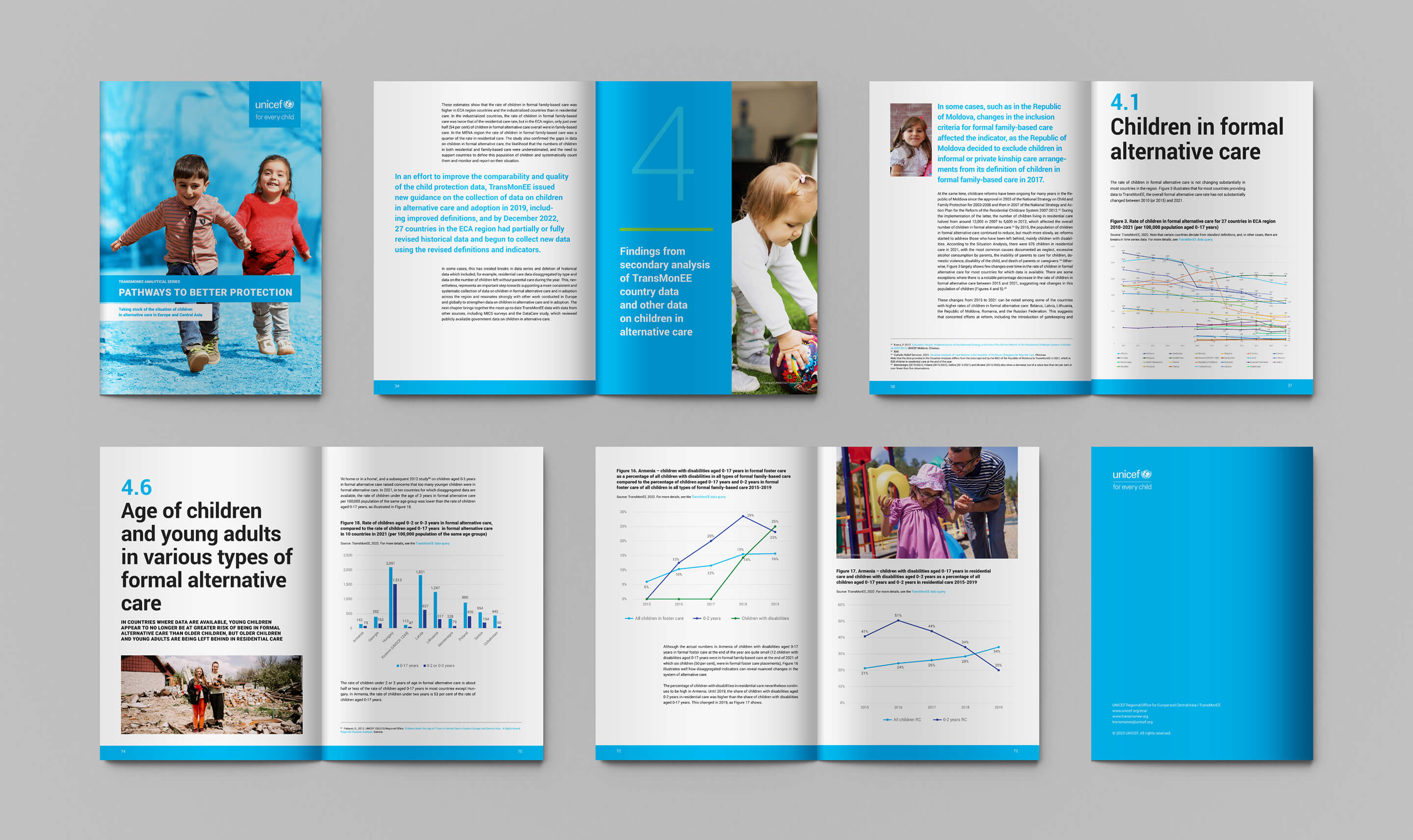
Open magazine spread displaying section 4.3 titled 'Girls and boys in formal alternative care' with text discussing sex-disaggregated data in alternative care and two photos of children: one group sitting on a couch, another group standing and sitting on colorful bouncing balls.A laid-out UNICEF report titled 'Pathways to Better Protection' about children in alternative care in Europe and Central Asia, showing the front cover with two children running on a blue floor, various open pages with text, charts, photos of children, and data analysis.
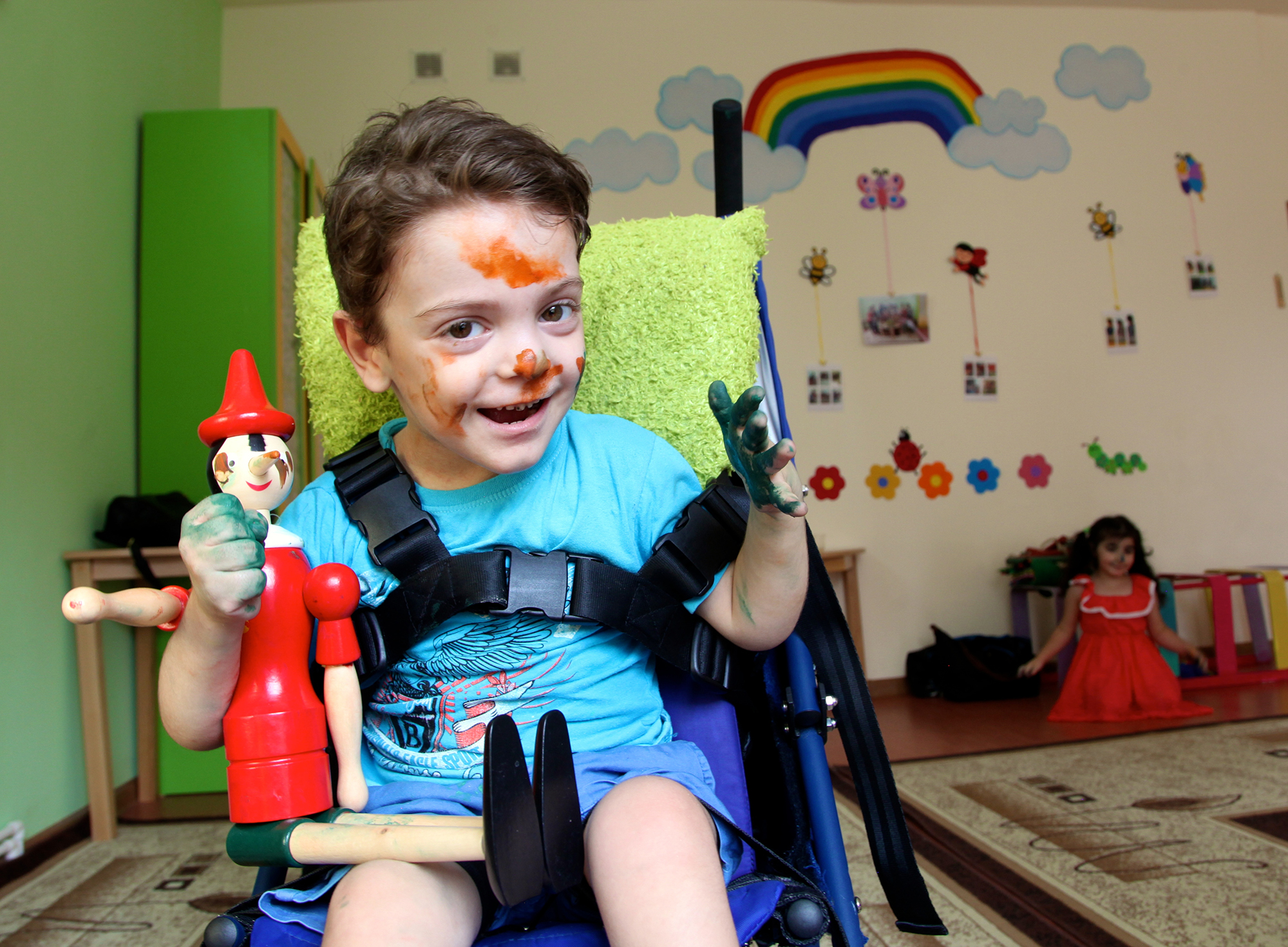
Smiling young boy with paint on his face and hands sitting in a wheelchair holding a wooden Pinocchio puppet, with a girl in a red dress sitting on the floor in a colorful playroom decorated with a rainbow, clouds, and flowers.
© UNICEF/UN038652/Pirozzi
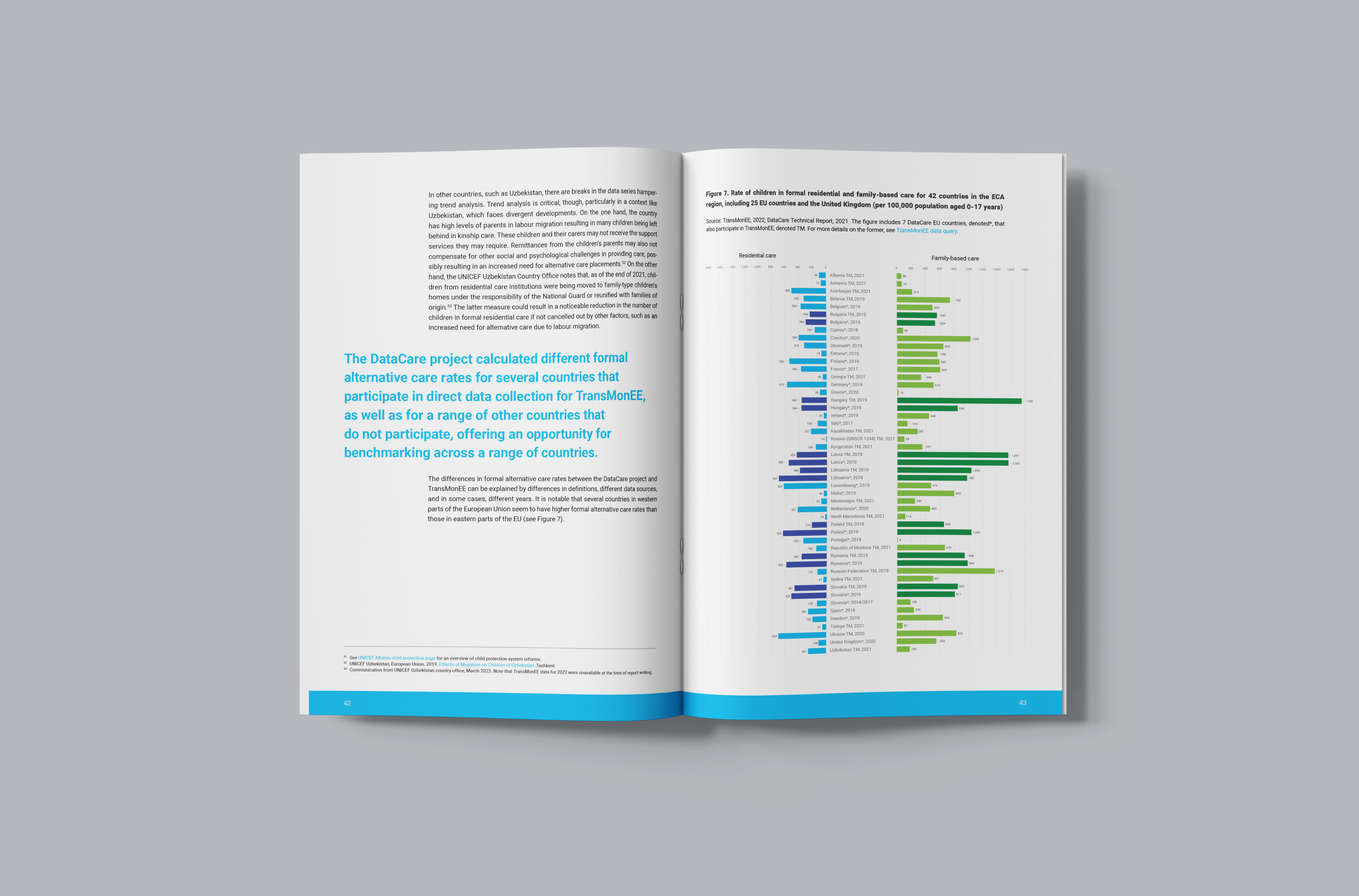
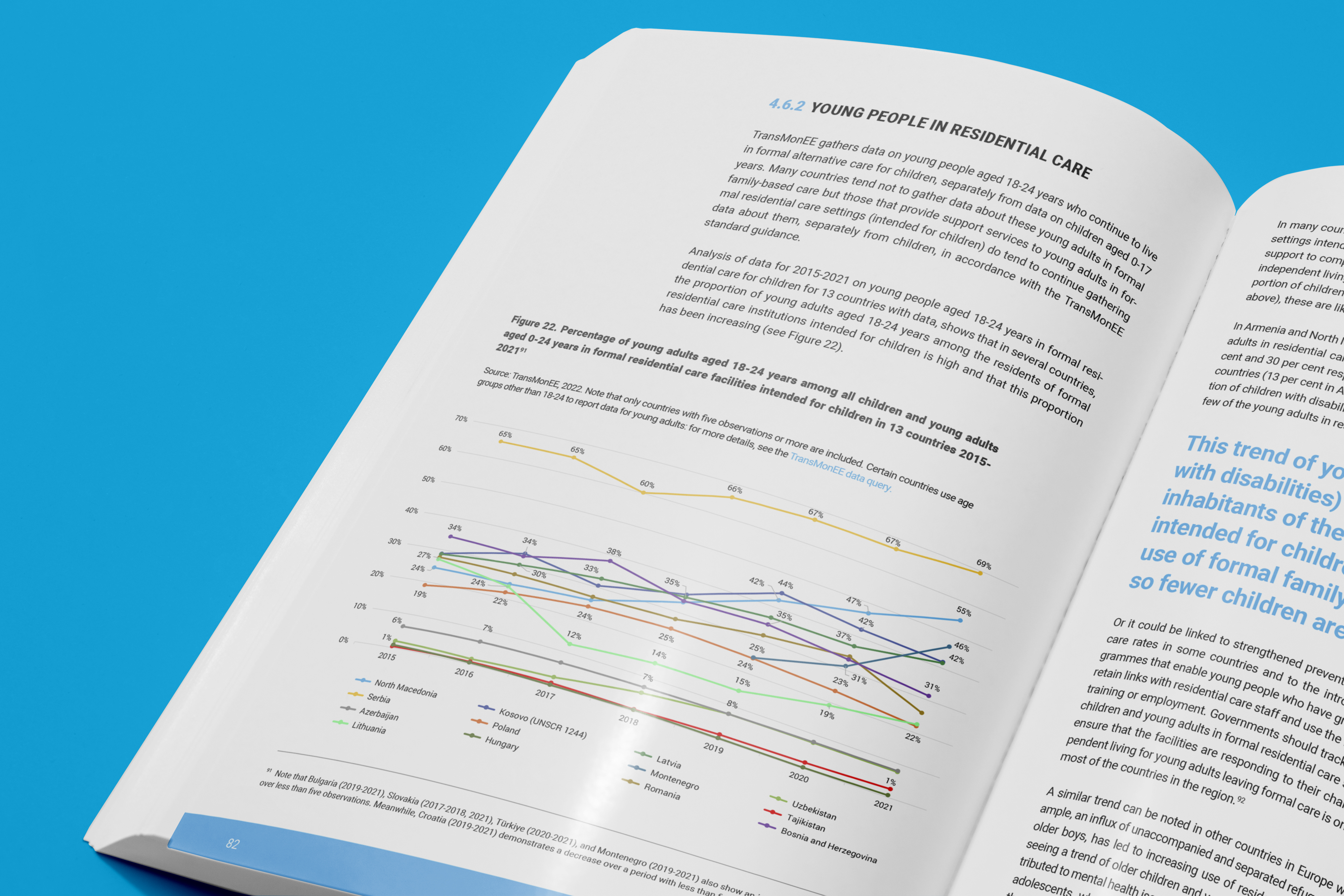
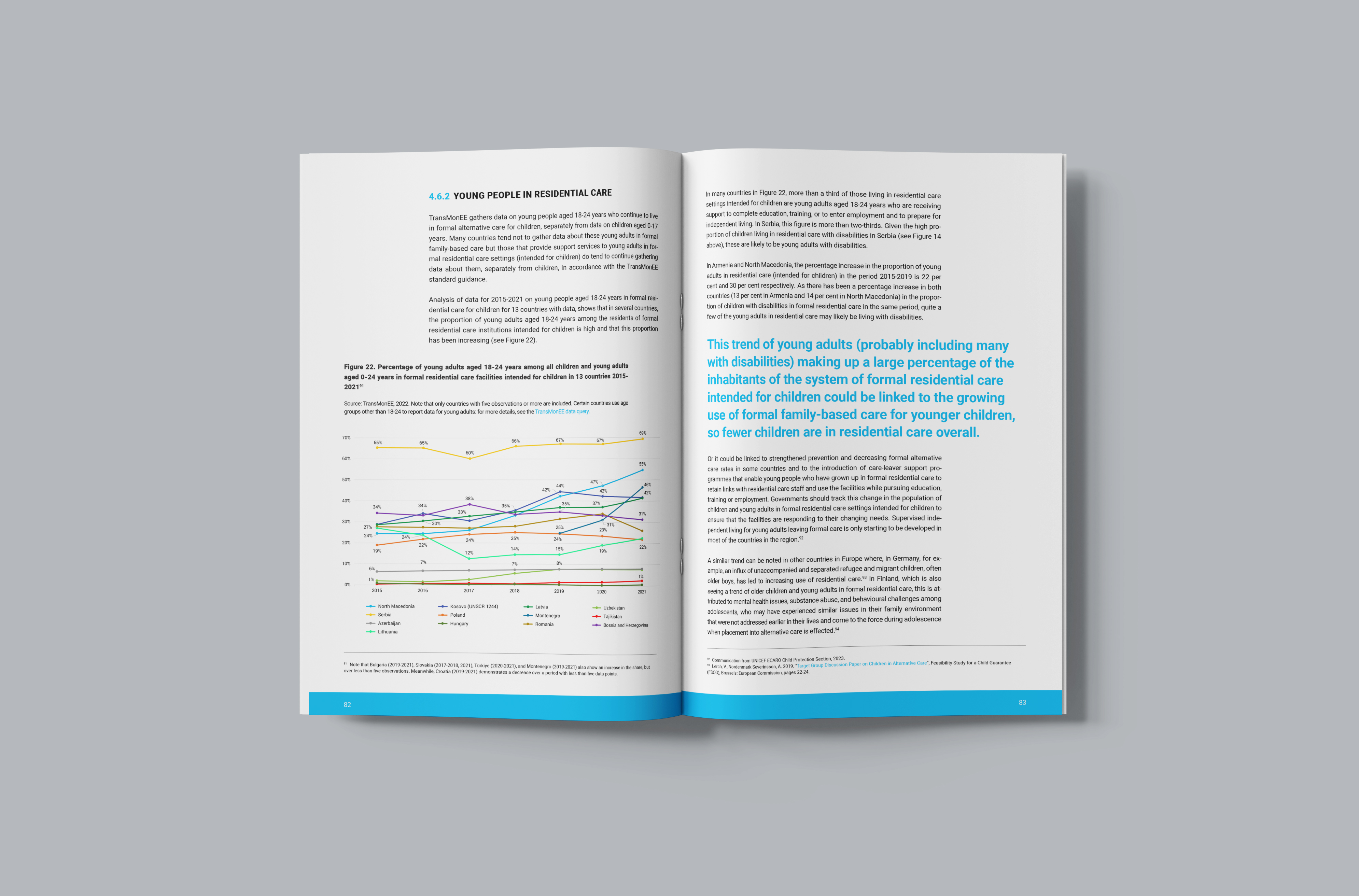
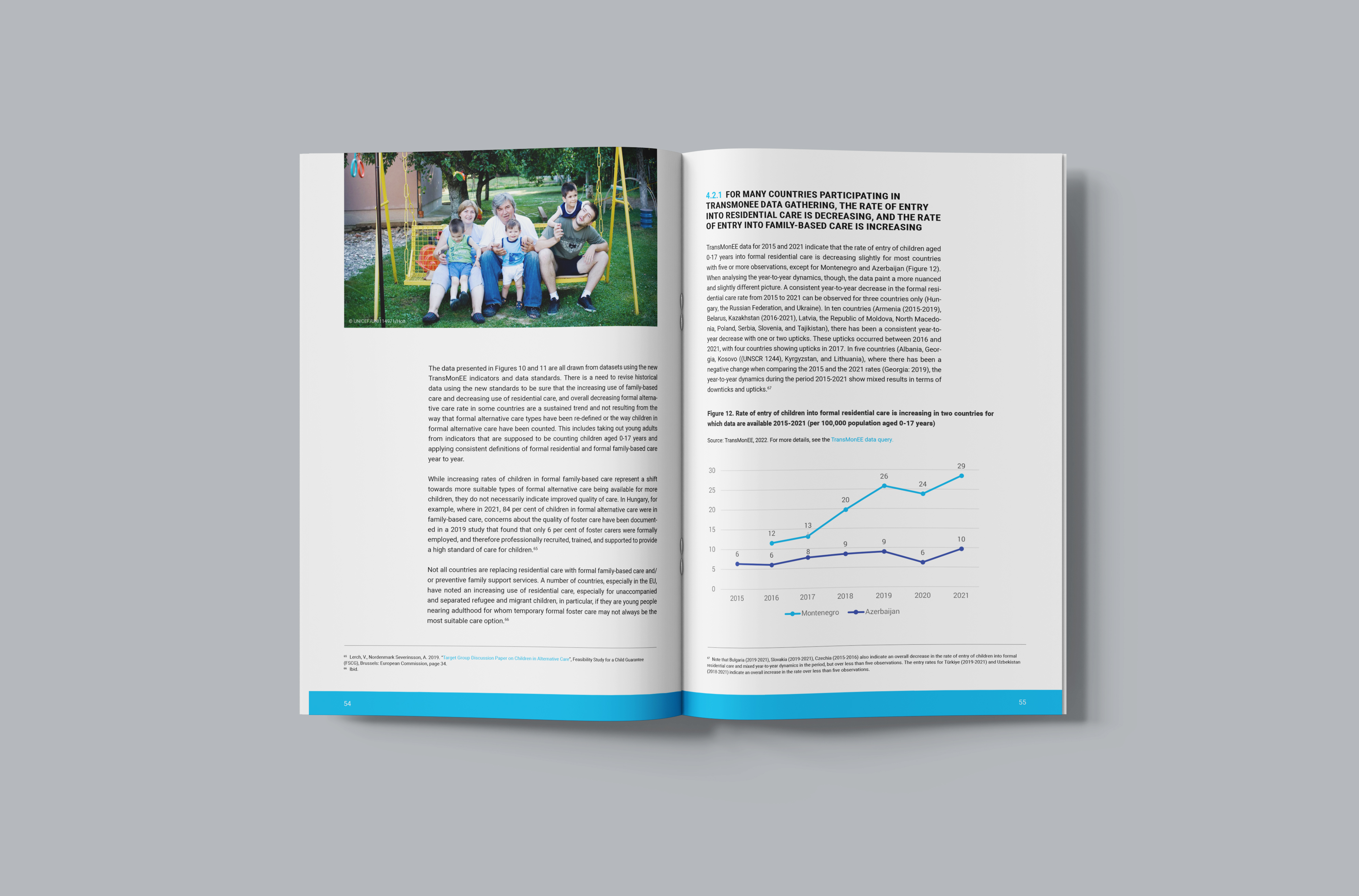
Open book showing text about the DataCare project calculating formal alternative care rates for several countries for TransMonEE, with a bar chart comparing rates of children in formal residential and family-based care in 42 countries of the ECA region, with blue bars for residential care and green bars for family-based care.Open book displaying a page on young people in residential care aged 18-24 years with text and a multi-line graph showing percentages for various countries from 2015 to 2021, illustrating trends in young adults in formal residential care intended for children.Open book showing a report section titled '4.6.2 Young People in Residential Care' with text discussing young adults aged 18-24 in formal residential care for children in 13 countries from 2015 to 2021. The left page includes a line graph labeled Figure 22 showing the percentage trends of young adults 18-24 years in residential care facilities for children by country over time. The right page contains detailed text analysis and highlights in blue about the increasing trend of young adults, including those with disabilities, in residential care systems primarily intended for children, possibly linked to the rise of formal family-based care for younger children and other factors. The pages have blue page numbers 82 and 83 at the bottom.Open magazine spread showing a photograph on the left page of two adults and three children seated on a yellow swing outdoors. Below the photo is a block of text about family-based care and residential care for children. The right page contains a section titled 'For many countries participating in TransMonEE data gathering,' discussing rates of entry into residential care versus family-based care, along with a line graph labeled 'Rate of entry of children into formal residential care is increasing in two countries' from 2015 to 2021, showing data for Montenegro and Azerbaijan.

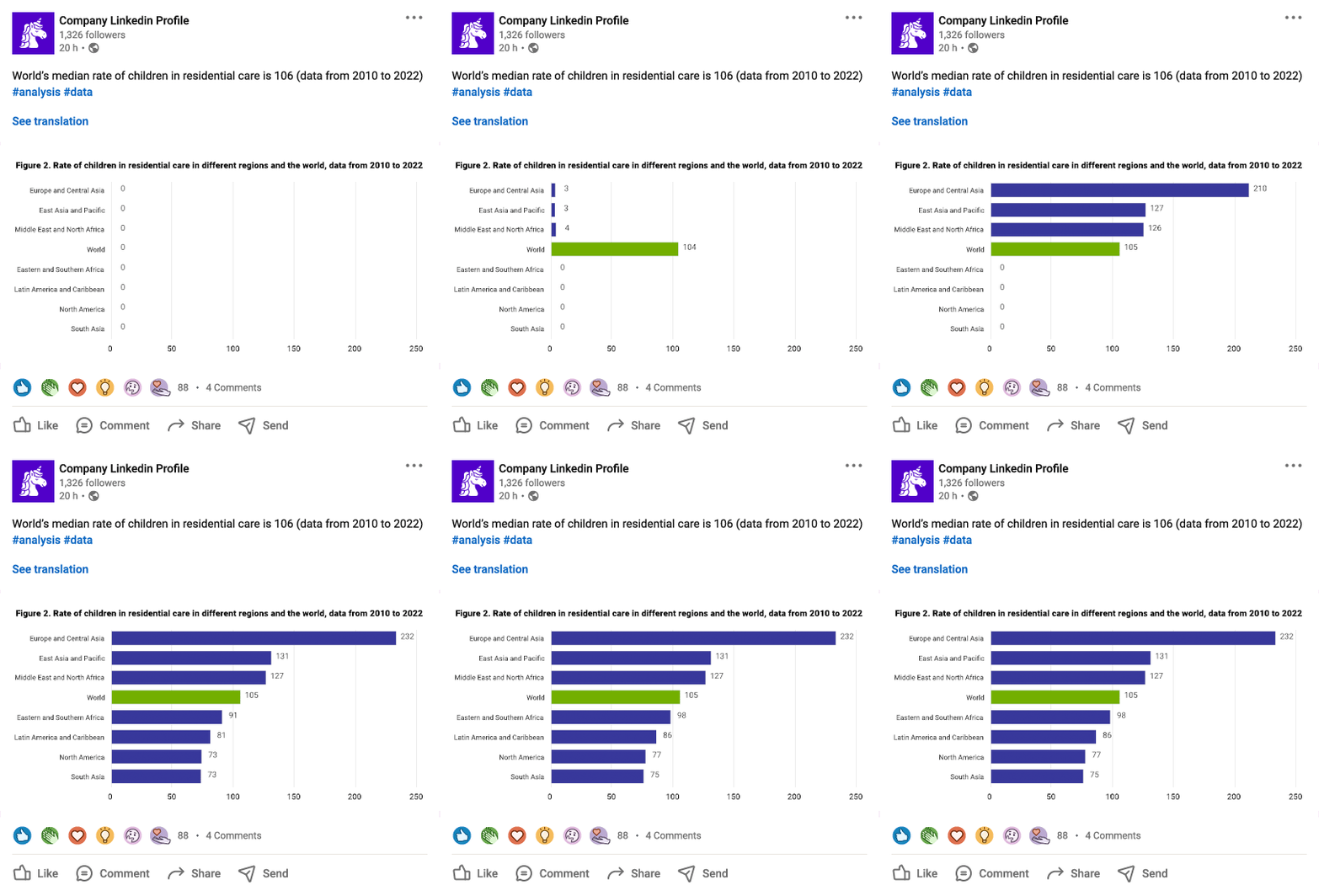
Animated highlights, such as key quotes or charts, can help promote the report on social media.
LinkedIn post from Company Linkedin Profile stating the world's median rate of children in residential care is 106 (data from 2010 to 2022) with hashtags #analysis #data. Below is a bar chart labeled 'Figure 2. Rate of children in residential care in different regions and the world, data from 2010 to 2022' showing zero rates for Europe and Central Asia, East Asia and Pacific, Middle East and North Africa, World, Eastern and Southern Africa, Latin America and Caribbean, North America, and South Asia, with a horizontal axis from 0 to 250. The post has 88 reactions, 4 comments, and options to Like, Comment, Share, and Send.

More cases in this category

Go to the category
Person with long dreadlocks wearing a red beanie and black shirt, smiling up at the camera while holding a tablet and stylus, surrounded by black and white letter cutouts on a light surface.

Need help designing a report? I can help you create reports of any complexity and develop all accompanying design materials.

Follow me on
Linkedin